Maud Diver
(Katherine Helen Maud Diver)
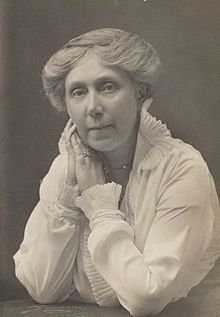
1867-1945
In This Collection
- Captain Desmond, V.C.. Edinburgh: Blackwood, 1907.
- The Great Amulet. Edinburgh: Blackwood, 1908.
- Candles in the Wind. Edinburgh: Blackwood, 1909.
- The Englishwoman in India. Edinburgh: Blackwood, 1909.
- Lilamani, a Study of Possibilities. London: Hutchinson, 1910.
- The Hero of Herat: A Frontier Biography in Romantic Form. London: Constable, 1912.
- The Judgment of the Sword: A Tale of the Kabul Tragedy and of the Part Played therein by Major E. Pottinger. London: Constable, 1913.
- Sunia and Other Stories. Edinburgh: Blackwood, 1913.
- Desmond’s Daughter. Edinburgh: Blackwood, 1916.
- The Strong Hours. London: Constable, 1918.
- Far to Seek: A Romance of England and India. Edinburgh: Blackwood, 1921.
- Lonely Furrow. London: Grosset and Dunlap, 1923.
- Siege Perilous and Other Stories. London: John Murray, 1924.
- But Yesterday—. London: John Murray, 1927.
- Unconquered: A Romance. London: John Murray, 1927.
- A Wild Bird. London: John Murray, 1929.
- Ships of Youth. Edinburgh: Blackwood, 1931.
- The Singer Passes: an Indian Tapestry. Edinburgh: Blackwood, 1934.
- Kabul to Kandahar. London: Peter Davies, 1935.
- The Dream Prevails. London: John Murray, 1938.
In Preparation
- Honoria Lawrence. London: John Murray, 1936.
- Royal India. London: Hodder & Stoughton, 1942.
- The Unsung. Edinburgh: Blackwood, 1945.
* * *
Obituary
Mrs. Maud Diver
Novelist and Writer on India
Mrs. Maud Diver, novelist and writer of books on India, died at Hindhead, Surrey, on October 14, after an illness lasting several weeks.
The eldest daughter of the late Colonel C. H. T. Marshall, Indian Army, and a granddaughter of the Lord Chief Baron, Sir Frederick Pollock, she was born in India and was christened Katherine Helen Maud. Most of her early life was spent either in the country of her birth or in Ceylon. In 1890 she married Lieutenant-Colonel T. Diver, The Royal Warwickshire Regiment, and finally came to live in this country in 1896. She became a widow in 1941 and leaves one son.
It was not until she was 40 that she published her first novel, “Captain Desmond, V.C.” This book, with its successors, established her as a novelist of life in British India, particularly on the North-West Frontier. After her first four novels, she turned her attention to more serious study, selecting for this purpose the insufficiently known work and outstanding personal qualities of Eldred Pottinger, and produced “The Hero of Herat” and “The Judgment of the Sword.” After those two volumes she wrote a further series of novels, but returned to history with “Kabul to Kandahar,” a short sketch of the Second Afghan War, and a fine tribute in 1936 to that remarkable woman, Honoria Lawrence, who sprang from the same Marshall stock as herself. She published in 1942 “In Royal India,” a study of fifteen of India’s principal States and their ruling Princes, and in 1944. under the title of, “The Unsung, a Record of British Services in India,” a book which brought to the knowledge of a wide public the magnificent and selfless work, carried out for the most part by men little known outside India, to improve the lot of the people of that country. When she was taken ill she was engaged on a further work of the same character, and was making plans for a study of Warren Hastings.
The Times, 17 October 1945